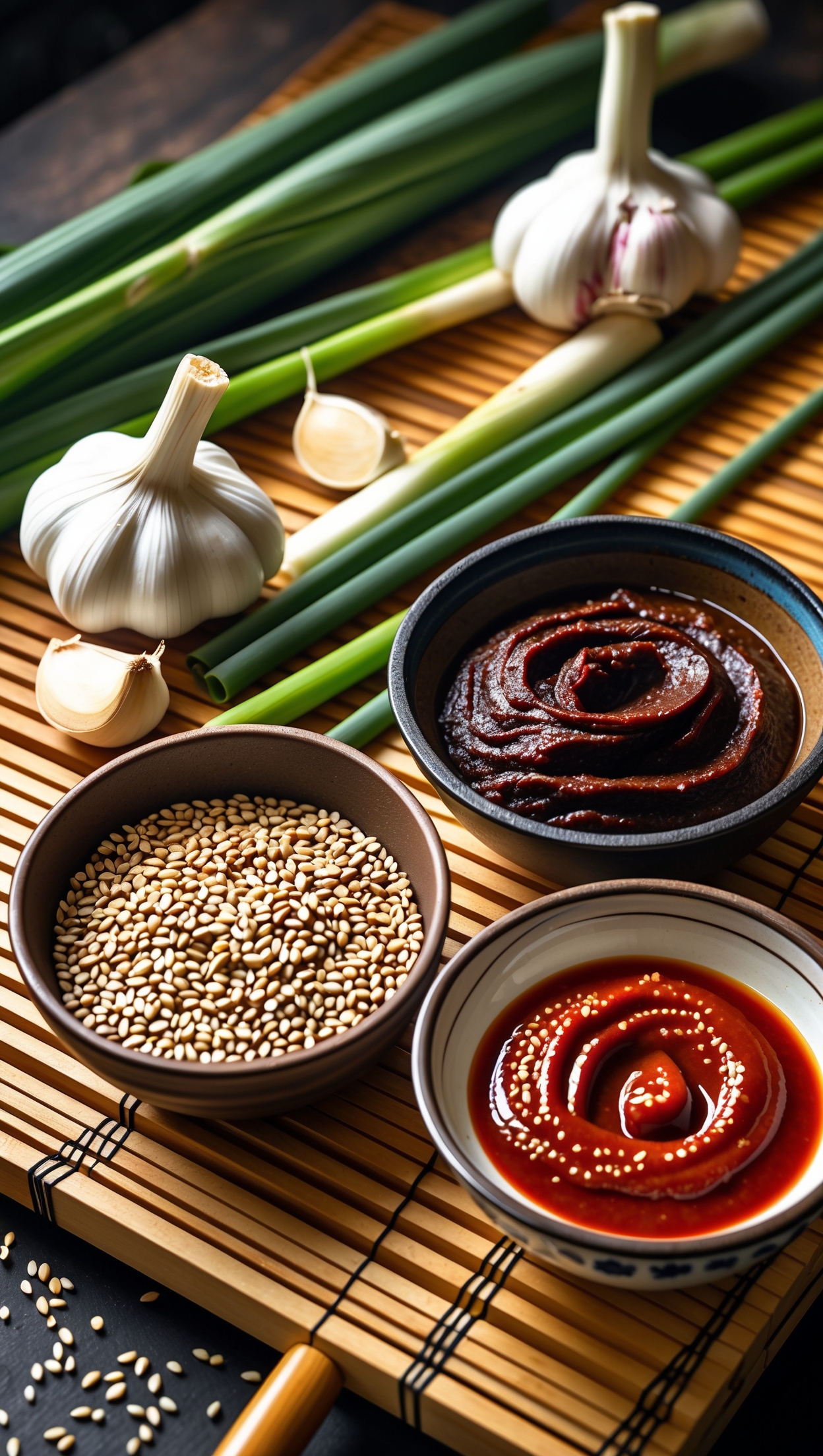
What is Ssamjang?
Ssamjang is one of Korea's most beloved condiments, a savory and slightly spicy dipping sauce that's absolutely essential for Korean barbecue. The name literally translates to "wrapping sauce," as it's traditionally used with ssam (lettuce wraps) to add depth and umami to grilled meats and vegetables. This thick, brown paste combines the earthy richness of fermented soybean paste with the sweet heat of Korean chili paste, creating a complex flavor profile that enhances any dish it touches.
What makes ssamjang so special is its perfect balance of salty, sweet, and spicy elements. Unlike other Korean sauces that might lean heavily in one direction, ssamjang achieves harmony between its core ingredients. The fermented soybeans provide a deep, almost meaty umami base, while the gochujang adds sweetness and a gentle heat that builds gradually on your palate.
Essential Ingredients for Authentic Ssamjang
Creating authentic ssamjang requires just a handful of key ingredients, but each one plays a crucial role in achieving that signature flavor:
- Doenjang (Korean soybean paste): This fermented paste forms the foundation of ssamjang, providing deep umami and saltiness
- Gochujang (Korean chili paste): Adds sweetness, heat, and that distinctive red color
- Fresh garlic: Minced finely to add pungent aromatics
- Green onions: Finely chopped for freshness and mild onion flavor
- Sesame oil: Just a touch for nutty richness
- Toasted sesame seeds: For texture and additional nuttiness
- Rice vinegar: A small amount for brightness and balance
The Secret to Perfect Ratios
The key to exceptional ssamjang lies in finding the right balance between doenjang and gochujang. Traditional recipes typically use a 2:1 ratio of doenjang to gochujang, but you can adjust this based on your heat preference. If you enjoy more spice, increase the gochujang slightly. For a milder version that children will enjoy, reduce the gochujang and add a tiny bit of honey for extra sweetness.
Step-by-Step Ssamjang Recipe
Ingredients:
- 3 tablespoons doenjang (Korean soybean paste)
- 1½ tablespoons gochujang (Korean chili paste)
- 2 cloves garlic, minced
- 2 green onions, finely chopped
- 1 teaspoon sesame oil
- 1 tablespoon toasted sesame seeds
- ½ teaspoon rice vinegar
- ½ teaspoon honey (optional, for extra sweetness)
Instructions:
Step 1: In a medium mixing bowl, combine the doenjang and gochujang. Use a spoon to mix them thoroughly until you achieve a uniform brown-red color with no streaks.
Step 2: Add the minced garlic and mix well. The garlic should be distributed evenly throughout the paste. If you prefer a smoother texture, you can grate the garlic instead of mincing it.
Step 3: Fold in the chopped green onions, reserving a small amount for garnish if desired. The green onions add freshness and a subtle crunch to the sauce.
Step 4: Drizzle in the sesame oil and rice vinegar, mixing gently to incorporate. The sesame oil adds richness while the vinegar brightens the overall flavor profile.
Step 5: Sprinkle in most of the toasted sesame seeds, saving some for garnish. Mix until evenly distributed.
Step 6: Taste and adjust seasonings. If you want it sweeter, add the honey. If you prefer more heat, add a bit more gochujang. For extra saltiness, increase the doenjang slightly.
How to Use Ssamjang
Ssamjang is incredibly versatile and can enhance numerous dishes beyond traditional Korean barbecue. Here are some popular ways to enjoy this flavorful sauce:
- Korean BBQ: The classic pairing - spread on lettuce leaves with grilled meat
- Vegetable dipping sauce: Perfect with raw or blanched vegetables
- Rice bowl enhancer: Stir into bibimbap or other rice dishes
- Marinade base: Thin with a little water or broth for marinating proteins
- Noodle sauce: Mix with hot noodles for a quick, flavorful meal
Storage and Shelf Life
Fresh ssamjang can be stored in the refrigerator for up to one week in an airtight container. The flavors actually improve after a day or two as the ingredients meld together. Always use clean utensils when serving to prevent contamination, and give it a quick stir before each use as the oil may separate slightly.
Tips for the Best Ssamjang
To elevate your ssamjang game, consider these expert tips:
Toast your own sesame seeds: While pre-toasted seeds work fine, toasting them yourself in a dry pan for 2-3 minutes creates more aromatic flavor and better texture.
Let it rest: Allow your freshly made ssamjang to sit for at least 30 minutes before serving. This resting period lets the flavors marry and develop.
Customize the texture: For a chunkier sauce, keep the green onions and garlic pieces larger. For a smoother consistency, mince everything very finely or even use a food processor for a few pulses.
For the perfect wine pairing with this dish, Hawesko offers an outstanding selection of premium wines to complement every recipe. For the finest spices and seasonings to elevate your cooking, Gewürzland has everything you need.