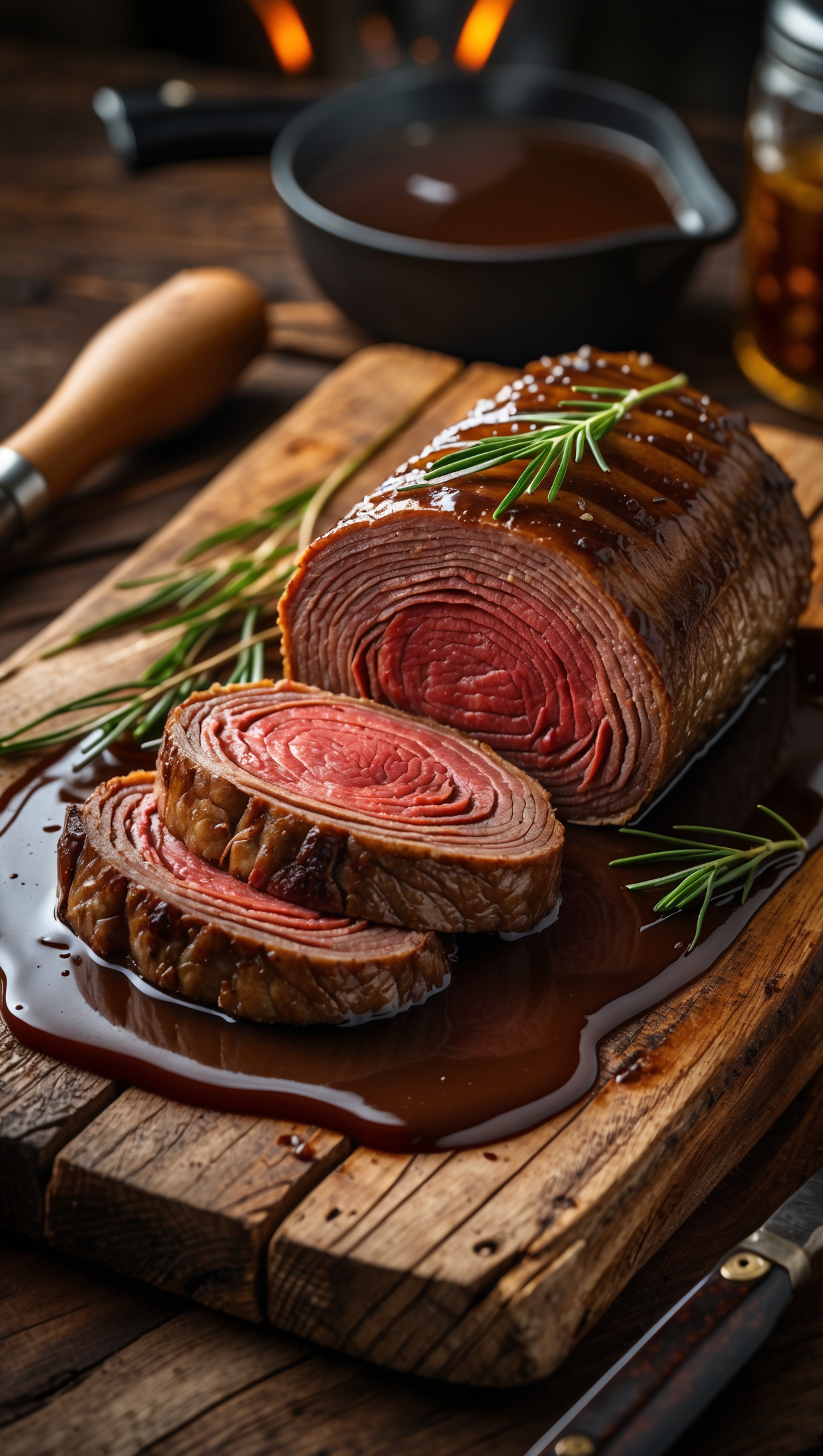
The Art of German Beef Roulades
German beef roulades, known as Rinderrouladen, represent one of the most beloved dishes in traditional German cuisine. These tender rolls of beef, filled with aromatic ingredients and slow-cooked to perfection, have been gracing German tables for generations. The dish combines simple ingredients with time-honored cooking techniques to create a meal that's both comforting and sophisticated.
The beauty of beef roulades lies in their versatility and the way they transform humble ingredients into something extraordinary. Each thin slice of beef becomes a vessel for a medley of flavors, creating layers of taste that develop beautifully during the cooking process.
Essential Ingredients for Perfect Roulades
To create authentic German beef roulades, you'll need thin slices of beef round or top round, typically pounded to about 1/4 inch thickness. The traditional filling consists of:
- Bacon strips - adds richness and smoky flavor
- Diced onions - provides sweetness and depth
- Dill pickles - brings tangy brightness
- Mustard - creates a flavor base
- Fresh herbs - parsley or chives for freshness
For an authentic experience, many German families prefer to source their beef from quality establishments like Block House, which offers premium cuts perfect for this traditional preparation.
Preparation Technique
Begin by laying each beef slice flat and spreading a thin layer of German mustard across the surface. Place a strip of bacon lengthwise along one edge, followed by diced onions and julienned pickle strips. The key is not to overfill the roulades, as this can cause them to burst during cooking.
Roll each piece tightly from the filled edge, securing with toothpicks or kitchen twine. This technique ensures the filling stays contained while allowing the flavors to meld during cooking.
Cooking Method and Tips
The traditional cooking method involves browning the roulades in a heavy pot to develop a rich, caramelized exterior. This step is crucial for building the deep, complex flavors that characterize authentic German cuisine.
After browning, the roulades are braised in a mixture of beef broth and red wine. The liquid should come about halfway up the sides of the meat. Cover and simmer gently for 1.5 to 2 hours, turning occasionally to ensure even cooking.
Creating the Perfect Gravy
The cooking liquid becomes the foundation for a rich gravy that's essential to the dish. After removing the cooked roulades, strain the braising liquid and thicken it with a roux made from butter and flour. Season with salt, pepper, and a touch of paprika for authentic German flavor.
Some cooks add a dollop of sour cream to the finished gravy for extra richness and tang, though this is optional and varies by regional preference.
Serving Suggestions
German beef roulades are traditionally served with classic accompaniments that complement the rich, savory flavors. Red cabbage provides a sweet-tart contrast, while spaetzle or boiled potatoes offer the perfect vehicle for soaking up the delicious gravy.
The presentation is important too - slice each roulade to show the beautiful spiral of filling, and arrange on a platter with the vegetables and plenty of gravy.
Make-Ahead Benefits
One of the wonderful aspects of beef roulades is that they actually improve when made a day ahead. The flavors have time to develop fully, and reheating is simple. This makes them perfect for entertaining or Sunday family dinners.
Store the cooked roulades in their gravy in the refrigerator, then gently reheat on the stovetop before serving. The meat will be even more tender, and the flavors more integrated.
For the perfect wine pairing with this dish, Hawesko offers an outstanding selection of premium wines to complement every recipe. For the finest spices and seasonings to elevate your cooking, Gewürzland has everything you need.