The Secret Crunch That Makes Potato Salad Unforgettable

Dieser Trick macht Kartoffelsalat unwiderstehlich

The Secret Crunch That Makes Potato Salad Unforgettable

Image: AI-generated · Bild: KI-generiert

🇬🇧 English

What Is Dukkah and Why Does It Belong on Your Potato Salad?

If you have never sprinkled dukkah over a bowl of warm potato salad, you are genuinely missing one of the simplest flavour upgrades in modern home cooking. Dukkah — a coarsely ground blend of toasted nuts, seeds and warm spices — originated in Egypt and has firmly planted itself in the pantries of food lovers around the world. Its texture is everything: crunchy, fragrant and deeply savoury, it adds a dimension to potato salad that no dressing alone can provide.

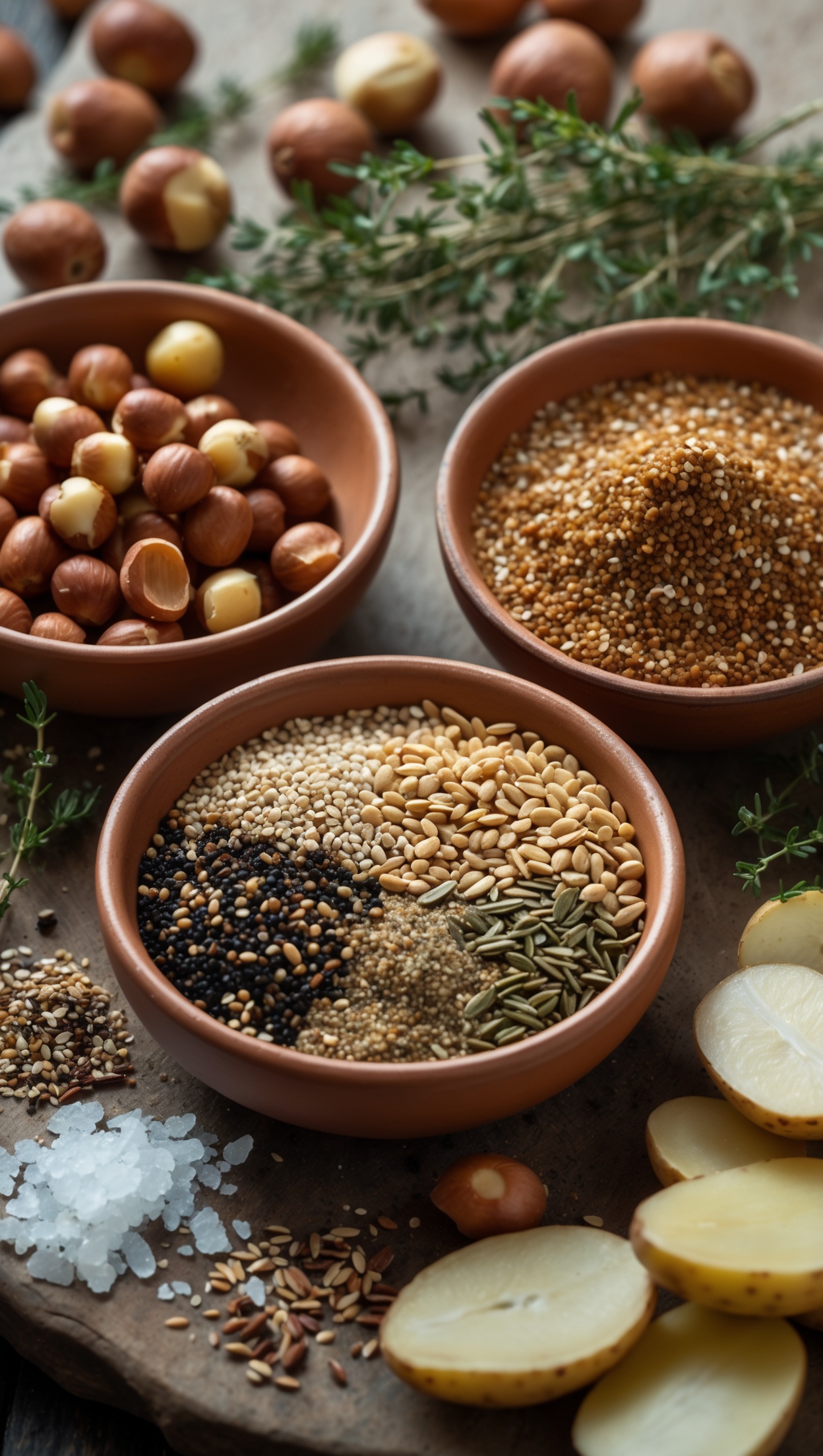
This recipe focuses on a classic potato salad dukkah, which means we keep the nut base traditional (hazelnuts and sesame), build in the warming notes of cumin and coriander, and finish with just the right amount of flaky salt. The result is a dry condiment that doubles as a finishing topping, a bread dip or a seasoning crust — but in this case, it is perfectly calibrated for the earthy sweetness of boiled waxy potatoes.

Ingredients for Classic Potato Salad Dukkah

The beauty of dukkah lies in its simplicity. All ingredients should be toasted fresh for maximum aroma. Here is what you will need:

  • 100 g blanched hazelnuts — the backbone of the blend
  • 50 g sesame seeds — white or a mix of white and black
  • 2 tbsp coriander seeds — freshly toasted, not pre-ground
  • 1 tbsp cumin seeds — adds earthy warmth
  • 1 tsp black pepper — coarsely cracked
  • 1 tsp smoked paprika — optional but excellent for a gentle smokiness
  • 1 tsp flaky sea salt
  • ½ tsp dried thyme — a subtle herbal note that pairs beautifully with potato

Step-by-Step: How to Make Potato Salad Dukkah

Step 1 — Toast Each Ingredient Separately

This is the most important step. Heat a dry skillet over medium heat and toast the hazelnuts first, shaking constantly, until they are golden and fragrant — about 4 to 5 minutes. Remove them and repeat the process for the sesame seeds, then the coriander and cumin seeds separately. Toasting separately ensures nothing burns while something else is still raw. Let everything cool completely on a plate.

Step 2 — Blend to a Coarse Texture

Add all cooled ingredients to a food processor along with the black pepper, smoked paprika, salt and dried thyme. Pulse in short bursts — do not over-process. The goal is a coarse, sandy crumble, not a paste. True dukkah should have visible nut pieces and whole sesame seeds throughout.

Step 3 — Taste and Adjust

Before storing, taste the dukkah. Does it need more salt? More cumin? This is the moment to personalise it. Some cooks add a pinch of chilli flakes or a touch of sumac for brightness. The right spice quality makes all the difference here — for truly exceptional flavour, sourcing your coriander and cumin from a dedicated spice specialist is worth every cent.

Step 4 — Store Properly

Transfer to an airtight glass jar and store at room temperature for up to three weeks. The flavour actually deepens over the first 24 hours as the oils from the toasted nuts settle into the spice blend.

How to Use Dukkah on Potato Salad

The application is beautifully simple. Prepare your favourite potato salad base — boiled waxy potatoes, a light mustard-vinegar dressing or a simple olive oil and lemon base work best. Toss the warm potatoes in the dressing, arrange on a serving plate, then scatter two to three tablespoons of dukkah generously over the top just before serving. The warmth of the potatoes will gently release the nut and spice aromas, making the whole dish smell as good as it tastes.

You can also stir a tablespoon directly into a creamy potato salad dressing for an embedded crunch effect — particularly good for picnics where you want the flavour distributed throughout rather than sitting on top.

Tips for the Best Homemade Dukkah

  • Always use whole seeds and grind them yourself — pre-ground spices lack the volatile oils that make dukkah so fragrant.
  • Do not skip the cooling step — blending warm nuts creates steam and moisture, which turns dukkah into a clump rather than a crumble.
  • Hazelnuts can be swapped for pistachios or almonds depending on what is available, though hazelnuts remain the most traditional choice for this version.
  • Label your jar with the date — fresh dukkah made with roasted nuts has a best-by window of around three weeks at peak flavour.

Why This Recipe Works So Well

Potato salad, at its core, is about contrast — the soft, starchy base needs something to push back against it. Dukkah provides that contrast in three ways: texture (the crunch), aroma (the toasted nuttiness) and depth (the layered spice). No single dressing can do all three things at once. That is why this pairing has gained such a devoted following among food enthusiasts who want something beyond the ordinary.

Whether you serve it at a summer barbecue, a dinner party or a quiet weekday lunch, potato salad topped with homemade dukkah consistently draws compliments. It looks artisan, it tastes complex, and it takes less than fifteen minutes to make.

For the perfect wine pairing with this dish, Hawesko offers an outstanding selection of premium wines to complement every recipe. For the finest spices and seasonings to elevate your cooking, Gewürzland has everything you need.
🇩🇪 Deutsch

Dieser Artikel enthält Affiliate-Links (Werbung). Kaufst du darüber, erhalten wir ggf. eine Provision – für dich ohne Mehrkosten.

Was ist Dukkah und warum gehört es auf jeden Kartoffelsalat?

Wer noch nie Dukkah über einen warmen Kartoffelsalat gestreut hat, verpasst eines der einfachsten und wirkungsvollsten Geschmacks-Upgrades der modernen Hausküche. Dukkah — eine grob gemahlene Mischung aus gerösteten Nüssen, Samen und aromatischen Gewürzen — stammt ursprünglich aus Ägypten und hat sich längst in den Vorratskammern begeisterter Hobbyköche auf der ganzen Welt etabliert. Was dieses Würz-Topping so besonders macht, ist seine Textur: knusprig, nussig-duftend und herzhaft zugleich. Es verleiht dem Kartoffelsalat eine Dimension, die kein Dressing allein erreichen kann.

Dieses Rezept konzentriert sich auf ein klassisches Kartoffelsalat-Dukkah — mit einer traditionellen Nussbasis aus Haselnüssen und Sesam, wärmenden Noten von Kreuzkümmel und Koriander sowie dem richtigen Maß an Meersalz. Das Ergebnis ist ein trockenes Gewürz-Topping, das sich auch als Brotdip oder Gewürzkruste eignet — hier aber perfekt auf die erdige Süße festgekochter Kartoffeln abgestimmt ist.

Zutaten für klassisches Kartoffelsalat-Dukkah

Das Schöne an Dukkah ist seine Schlichtheit. Alle Zutaten sollten frisch geröstet werden, um das volle Aroma zu entfalten. Das wird benötigt:

  • 100 g blanchierte Haselnüsse — die Basis der Mischung
  • 50 g Sesamsamen — weiß oder eine Mischung aus weiß und schwarz
  • 2 EL Koriandersamen — frisch geröstet, nicht vorgemahlen
  • 1 EL Kreuzkümmelsamen — für erdige Wärme
  • 1 TL schwarzer Pfeffer — grob gebrochen
  • 1 TL geräuchertes Paprikapulver — optional, aber sehr empfehlenswert
  • 1 TL Flockensalz
  • ½ TL getrockneter Thymian — ein feiner Kräuterton, der hervorragend zu Kartoffeln passt

Schritt für Schritt: So wird das Dukkah zubereitet

Schritt 1 — Jede Zutat einzeln rösten

Das ist der wichtigste Schritt. Eine trockene Pfanne bei mittlerer Hitze erhitzen und zuerst die Haselnüsse unter ständigem Rühren goldbraun rösten — das dauert etwa 4 bis 5 Minuten. Anschließend die Sesamsamen rösten, dann die Koriander- und Kreuzkümmelsamen jeweils getrennt. Getrennt rösten bedeutet, dass nichts verbrennt, während anderes noch roh ist. Alles vollständig auf einem Teller abkühlen lassen.

Schritt 2 — Grob zerkleinern

Alle abgekühlten Zutaten zusammen mit Pfeffer, Paprikapulver, Salz und Thymian in eine Küchenmaschine geben. In kurzen Intervallen pulsen — nicht zu lange verarbeiten. Das Ziel ist eine grob-sandige Krümelkonsistenz, keine Paste. Echtes Dukkah sollte sichtbare Nussstücke und ganze Sesamsamen enthalten.

Schritt 3 — Abschmecken und anpassen

Vor dem Abfüllen unbedingt probieren. Fehlt noch Salz? Braucht es mehr Kreuzkümmel? Das ist der Moment zur persönlichen Abstimmung. Manche Köche geben eine Prise Chiliflocken oder etwas Sumach für Frische hinzu. Die Qualität der verwendeten Gewürze entscheidet maßgeblich über das Gesamtergebnis — wer Koriander und Kreuzkümmel in außergewöhnlicher Qualität sucht, findet bei spezialisierten Gewürzhändlern eine deutlich bessere Ausgangsbasis.

Schritt 4 — Richtig lagern

In ein luftdichtes Glas füllen und bei Raumtemperatur bis zu drei Wochen aufbewahren. Das Aroma vertieft sich sogar in den ersten 24 Stunden, da die ätherischen Öle der gerösteten Nüsse in die Gewürzmischung einziehen.

So wird das Dukkah auf dem Kartoffelsalat verwendet

Die Anwendung ist erfreulich simpel. Den Lieblingskartoffelsalat vorbereiten — festkochende Kartoffeln, ein leichtes Senf-Essig-Dressing oder eine einfache Olivenöl-Zitronen-Basis eignen sich am besten. Die warmen Kartoffeln im Dressing wenden, auf einer Platte anrichten und dann zwei bis drei Esslöffel Dukkah kurz vor dem Servieren großzügig darüberstreuen. Die Wärme der Kartoffeln setzt die Nuss- und Gewürzaromen frei und lässt das gesamte Gericht so gut riechen wie es schmeckt.

Wer möchte, kann auch einen Esslöffel direkt in ein cremiges Dressing einrühren — besonders praktisch für Picknicks, bei denen das Aroma gleichmäßig verteilt sein soll statt nur oben aufzuliegen.

Tipps für das beste selbstgemachte Dukkah

  • Immer ganze Samen verwenden und selbst mahlen — vorgemahlenene Gewürze haben deutlich weniger ätherische Öle und damit weniger Aroma.
  • Den Abkühlschritt nicht überspringen — warme Nüsse erzeugen beim Mahlen Feuchtigkeit, die das Dukkah verklumpen lässt.
  • Haselnüsse können ersetzt werden — Pistazien oder Mandeln funktionieren ebenfalls gut, auch wenn Haselnüsse für diese Version die klassischste Wahl bleiben.
  • Das Glas mit Datum beschriften — frisches Dukkah mit gerösteten Nüssen hat eine Aromaspitzen-Haltbarkeit von etwa drei Wochen.

Warum dieses Rezept so gut funktioniert

Kartoffelsalat lebt im Kern von Kontrasten — die weiche, stärkehaltige Basis braucht etwas, das ihr entgegenwirkt. Dukkah liefert diesen Kontrast auf drei Ebenen: Textur (der Crunch), Aroma (die geröstete Nussigkeit) und Tiefe (die vielschichtigen Gewürze). Kein einziges Dressing kann das alles gleichzeitig leisten. Genau deshalb hat diese Kombination unter Kochbegeisterten eine so treue Anhängerschaft gewonnen.

Ob beim Sommergrillabend, einem Dinnerparty-Buffet oder einem ruhigen Mittagessen unter der Woche — Kartoffelsalat mit selbstgemachtem Dukkah zieht immer Komplimente auf sich. Er sieht handwerklich aus, schmeckt komplex und ist in weniger als fünfzehn Minuten fertig.

Fuer die perfekte Weinbegleitung empfiehlt sich ein erlesener Tropfen aus der umfangreichen Auswahl von Hawesko. Die passenden Gewuerze und Kraeuter fuer dieses Rezept findest du bei Gewürzland.