This article contains affiliate links. If you buy through them, we may earn a commission at no extra cost to you.
Authentic Chimichurri Recipe — Make It the Day Before
Chimichurri is one of the most celebrated sauces in all of Latin American cooking. Born in Argentina and Uruguay, this vibrant green herb sauce has crossed borders and won hearts worldwide — and for good reason. It is bright, punchy, garlicky and deeply aromatic. Best of all, it needs no cooking whatsoever and comes together in under 15 minutes. The only real secret? Make it the day before and let the flavours do the work overnight.
In this guide you will find everything you need to prepare an authentic chimichurri at home: the right ingredients, the traditional method, tips on storage and ideas for what to serve it with.
What Is Chimichurri?
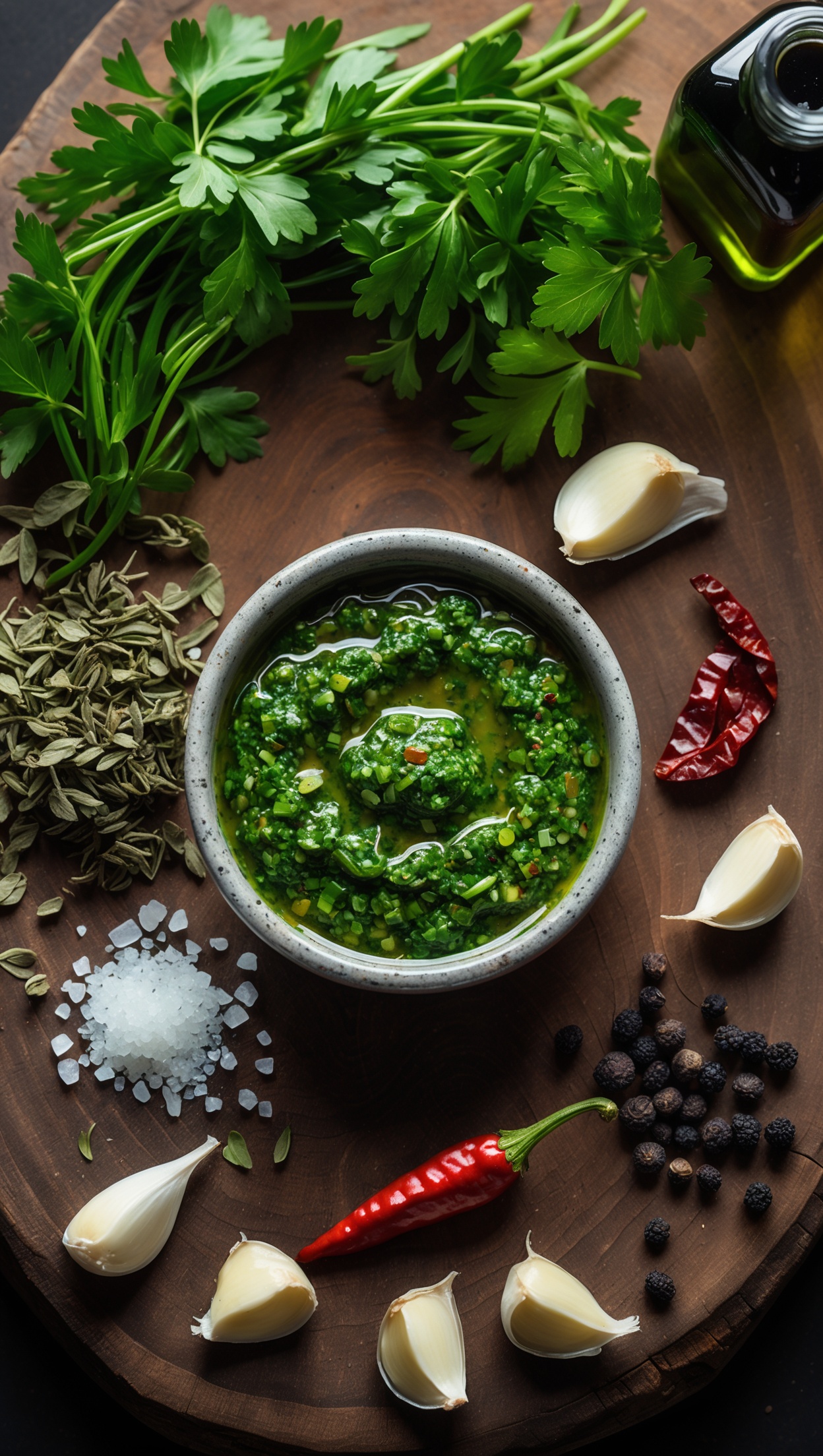
Chimichurri is a cold, uncooked herb sauce typically made from finely chopped flat-leaf parsley, garlic, dried oregano, red chilli, red wine vinegar and olive oil. There are two main versions: the classic chimichurri verde (green) and the less common chimichurri rojo (red), which includes tomato or red capsicum. This recipe focuses on the verde version — the one you will find at every Argentine parrilla (grill house).
Unlike pesto, chimichurri is never blended into a smooth paste. The herbs are always hand-chopped, giving the sauce its characteristic rustic texture and keeping each ingredient identifiable on the palate.
Ingredients
- 1 large bunch flat-leaf parsley (about 60 g), finely chopped
- 3 cloves garlic, minced
- 1 tsp dried oregano
- 1 tsp red chilli flakes (or 1 fresh red chilli, finely chopped)
- 3 tbsp red wine vinegar
- 120 ml extra-virgin olive oil
- ½ tsp coarse sea salt, or to taste
- ¼ tsp freshly ground black pepper
- 2 tbsp fresh lemon juice (optional, for extra brightness)
A Note on Oregano
Dried oregano is not just a substitute here — it is the authentic choice. In South America, dried oregano delivers the slightly earthy, almost floral backbone that fresh oregano simply cannot replicate in this context. Quality matters enormously: old, dusty oregano from the back of your cupboard will produce a flat sauce. Use freshly sourced dried oregano for the best results.
Step-by-Step Instructions
Step 1 — Chop the Parsley
Wash and thoroughly dry the flat-leaf parsley. Moisture is the enemy of a well-balanced chimichurri, as it can dilute the oil and vinegar base. Chop the leaves finely by hand — and include the tender upper stems if you like a slightly more robust texture.
Step 2 — Mince the Garlic
Peel and mince the garlic as finely as you can. Some cooks use a garlic press, but hand-mincing gives you more control and a less pungent result. For a milder flavour, you can let the minced garlic sit in the vinegar for five minutes before combining everything.
Step 3 — Combine the Dry Ingredients
In a medium bowl, mix together the chopped parsley, minced garlic, dried oregano and red chilli flakes. Stir briefly so everything is evenly distributed before adding any liquid.
Step 4 — Add the Liquids
Pour in the red wine vinegar and the lemon juice if you are using it. Stir, then slowly add the extra-virgin olive oil, mixing as you go. The ratio of oil to vinegar is a matter of personal taste — the recipe above gives a pleasantly tangy result. If you prefer something milder, increase the oil slightly.
Step 5 — Season and Adjust
Add the coarse sea salt and black pepper. Taste carefully and adjust: more vinegar for acidity, more chilli for heat, more oil for mellowness. This is your sauce — make it work for you.
Step 6 — Rest Overnight (Highly Recommended)
Transfer the chimichurri to a clean glass jar, seal it and place it in the refrigerator. Leave it for at least 2 hours, but overnight is ideal. During this resting time, the garlic softens slightly, the oregano rehydrates and the acidity of the vinegar begins to meld with the olive oil. The result is a far more rounded, complex and flavourful sauce than one made and served immediately.
Step 7 — Serve
Take the jar out of the fridge about 20 minutes before serving. The olive oil will have solidified slightly in the cold — bringing it back to room temperature restores its texture. Give it a good stir before spooning it over your dish.
What to Serve with Chimichurri
- Grilled beef or lamb — the classic pairing; the acidity cuts beautifully through rich, charred meat
- Grilled or roasted vegetables — aubergine, courgette and sweet peppers are all excellent
- Crusty bread — use the sauce as a flavourful dipping condiment
- Grilled halloumi or tofu — a brilliant plant-based option
- Eggs — a spoonful over fried or scrambled eggs transforms a simple breakfast
- Jacket potatoes or roasted new potatoes — a surprisingly wonderful pairing
Storage Tips
Chimichurri keeps well in a sealed glass jar in the refrigerator for up to 5 days. The flavour actually continues to develop over the first two days, then gradually mellows. Do not freeze it — the parsley loses its brightness and fresh character once thawed.
Common Mistakes to Avoid
- Using a blender — this turns chimichurri into a purée and destroys its authentic character. Always chop by hand.
- Using curly parsley — flat-leaf (Italian) parsley has a stronger, less bitter flavour that is essential for this recipe.
- Skipping the rest time — even two hours in the fridge makes a significant difference to the final taste.
- Using low-quality olive oil — since this sauce is raw, the olive oil is front and centre. Use the best extra-virgin olive oil you have.
- Over-salting early — the salt intensifies as the sauce rests. Season lightly to begin with and adjust after resting.
Variations
Chimichurri Rojo
Add 2 tbsp of finely diced roasted red pepper and a pinch of smoked paprika. This version is slightly sweeter and pairs especially well with pork or grilled aubergine.
Mint Chimichurri
Replace a quarter of the parsley with fresh mint. This variation is wonderful alongside grilled lamb or roasted carrots.
Chimichurri with Fresh Coriander
Swap half the parsley for fresh coriander (cilantro). This gives the sauce a more Mexican-leaning profile and is excellent with grilled corn or tacos.
Frequently Asked Questions
Can I make chimichurri without vinegar?
You can use lemon juice as a full substitute for the red wine vinegar, though the flavour will be a little brighter and less complex. Some recipes use a mix of both, which is also delicious.
Is chimichurri the same as pesto?
No. Pesto is blended, contains cheese and pine nuts, and is Italian. Chimichurri is hand-chopped, contains no dairy or nuts, and is South American. They are both herb-based condiments but are entirely different in flavour and texture.
How spicy is chimichurri?
As written, this recipe is mildly spicy. You can reduce or omit the chilli flakes entirely for a completely mild version, or double them if you prefer more heat.
Chimichurri is one of those rare recipes that is simultaneously easy enough for a weeknight and impressive enough for a dinner party. Make a jar the evening before your next barbecue, and you will wonder how you ever managed without it.
If you want to use top-quality dried oregano and chilli flakes for your chimichurri, you can source them via Gewürzland — including a selection of 600+ herbs and spices from selected sources worldwide — to get the most vibrant, authentic flavour in every jar.