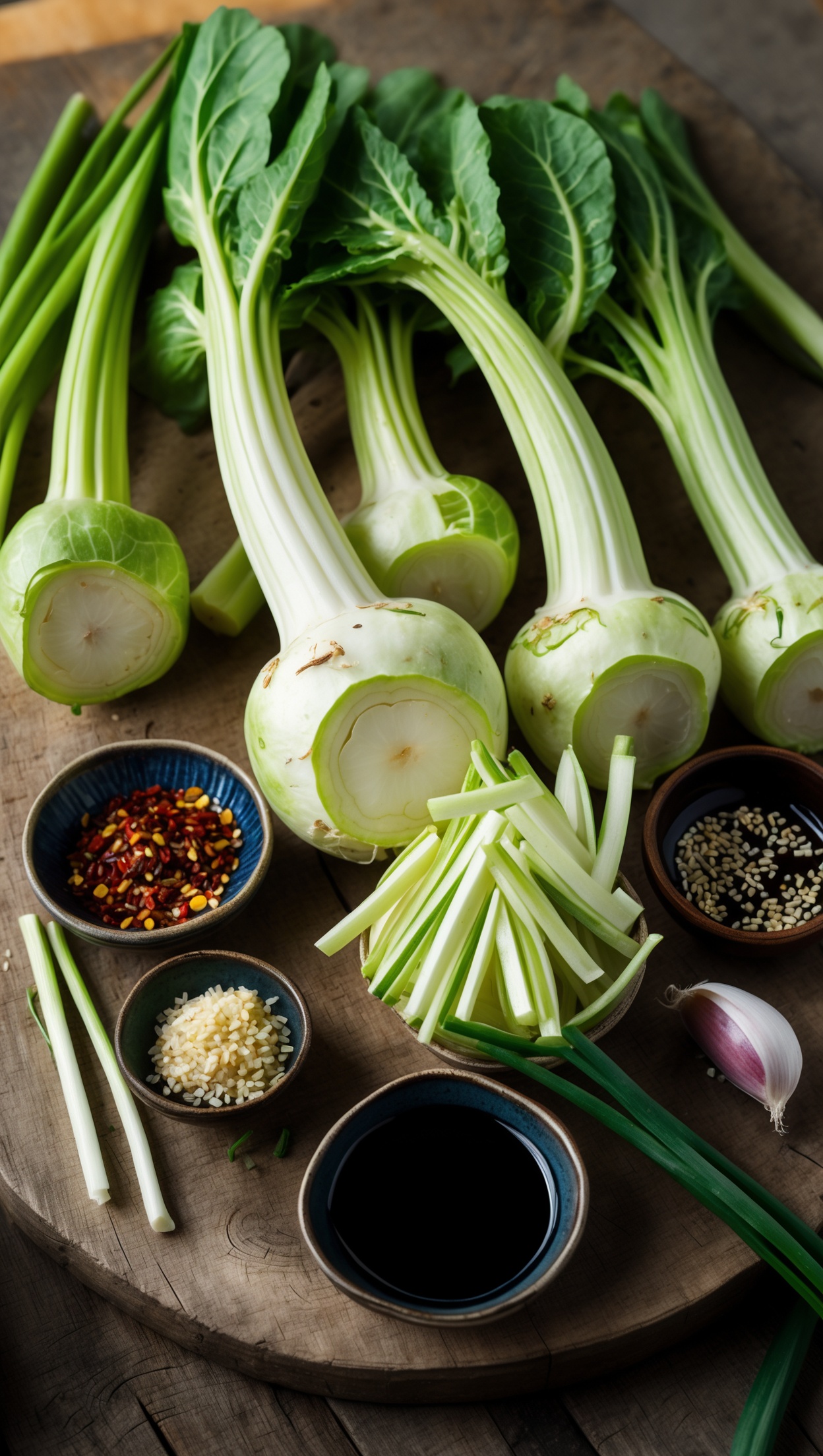
Authentic Korean-Style Kohlrabi Recipe — Easy & Delicious
If you have never thought of kohlrabi as a Korean ingredient, you are in for a wonderful surprise. This humble, slightly sweet root vegetable transforms beautifully when treated with bold Korean flavours — gochugaru, sesame, garlic, and a touch of vinegar. The result is a crispy, refreshing, mildly spicy side dish that pairs perfectly with steamed rice, grilled tofu, or virtually any Asian main course.
This recipe draws inspiration from traditional Korean muchim (무침) — a style of seasoned vegetable dish that is tossed rather than cooked, preserving the natural crunch of the produce. It is quick, vegan-friendly, and absolutely packed with flavour. Whether you are new to Korean cooking or a seasoned fan, this is a dish you will want to make again and again.
Why Kohlrabi Works So Well in Korean Cuisine
Kohlrabi has a mild, slightly peppery sweetness and a firm, crisp texture that holds up beautifully when salted and dressed. In many ways, it is similar to mu (Korean radish), which is used extensively in Korean banchan (side dishes). The two vegetables share a satisfying crunch and a clean, neutral base that absorbs bold seasonings like a dream.
Kohlrabi is also incredibly nutritious — rich in vitamin C, fibre, and antioxidants. It is a brilliant way to enjoy more vegetables while still getting that punchy, addictive Korean flavour profile you love.
Ingredients
- 2 medium kohlrabi bulbs (approx. 500 g), peeled and cut into thin matchsticks
- 1 tsp fine sea salt (for drawing out moisture)
- 1–2 tbsp gochugaru (Korean red pepper flakes) — adjust to taste
- 1 tbsp soy sauce
- 1 tbsp rice vinegar
- 1 tsp sesame oil
- 2 tsp toasted sesame seeds
- 2 cloves garlic, finely minced
- 2 spring onions, thinly sliced
- 1 tsp sugar or honey
- Optional: a small pinch of fish sauce for umami depth (omit for vegan version)
Step-by-Step Instructions
Step 1 – Prepare the Kohlrabi
Peel the kohlrabi thoroughly, removing both the tough outer skin and any fibrous layers beneath. Cut the bulbs into thin slices first, then stack the slices and cut them into matchstick-sized strips (about 5 cm long and 3 mm thick). Place them in a large bowl.
Step 2 – Salt and Rest
Sprinkle the kohlrabi matchsticks with fine sea salt, toss well, and leave to rest for 15–20 minutes. This draws out excess moisture, giving the finished dish a better texture and allowing the dressing to cling more effectively. After resting, squeeze the kohlrabi gently with your hands to remove the liquid, then pat dry with a clean kitchen towel.
Step 3 – Make the Dressing
In a small bowl, combine the gochugaru, soy sauce, rice vinegar, sesame oil, minced garlic, and sugar. Mix until the sugar dissolves and the dressing is well combined. Taste and adjust — more gochugaru for heat, more vinegar for brightness, more soy sauce for saltiness.
The quality of your gochugaru really does make a difference here. For authentic Korean red pepper flakes with the right balance of smokiness and fruity heat, sourcing from a specialist is worthwhile.
Step 4 – Dress and Toss
Add the dressing to the kohlrabi and toss thoroughly until every piece is evenly coated. Add the sliced spring onions and toasted sesame seeds, and toss once more. Taste and adjust seasoning as needed.
Step 5 – Rest and Serve
For the best flavour, allow the dressed kohlrabi to rest for at least 10 minutes before serving. This gives the flavours time to meld and intensify. You can also refrigerate it for up to 24 hours — it actually improves overnight as the kohlrabi absorbs the seasoning more deeply.
Serving Suggestions
This Korean kohlrabi muchim is wonderfully versatile. Here are a few ideas to enjoy it:
- Serve as a banchan (Korean side dish) alongside steamed white rice and miso soup
- Use as a topping for bibimbap or Korean grain bowls
- Stuff into lettuce wraps with tofu or marinated mushrooms
- Add to Korean-style tacos as a spicy slaw
- Pair alongside japchae or Korean glass noodles for a full spread
Tips for the Best Korean Kohlrabi
- Choose young, small kohlrabi — they are more tender and sweeter than large, older bulbs
- Do not skip the salting step — it is essential for achieving the right texture
- Use proper gochugaru, not generic chilli flakes — the flavour is distinctly different, with a milder heat and fruity undertone
- Toast your sesame seeds fresh for the most fragrant result
- This dish keeps well in the fridge for up to 3 days in an airtight container
Make It Your Own
Feel free to experiment with this base recipe. Try adding julienned carrots or cucumber for extra colour and crunch. A small amount of grated ginger adds warmth and complexity. For a creamier version, a teaspoon of doenjang (Korean fermented soybean paste) stirred into the dressing adds a deeply savoury, umami-rich dimension.
This is the kind of recipe that invites creativity — once you have the basic technique down, the variations are endless. It is also a wonderful introduction to Korean home cooking for beginners, demonstrating how just a handful of pantry staples can create something truly spectacular.
A Note on Spice Quality
The secret to any great Korean-inspired dish lies in the quality of the core seasonings. Gochugaru varies enormously in flavour and colour between brands and origins. For the perfect wine pairing with this dish, Hawesko offers an outstanding selection of premium wines to complement every recipe. For the finest spices and seasonings to elevate your cooking, Gewürzland has everything you need.