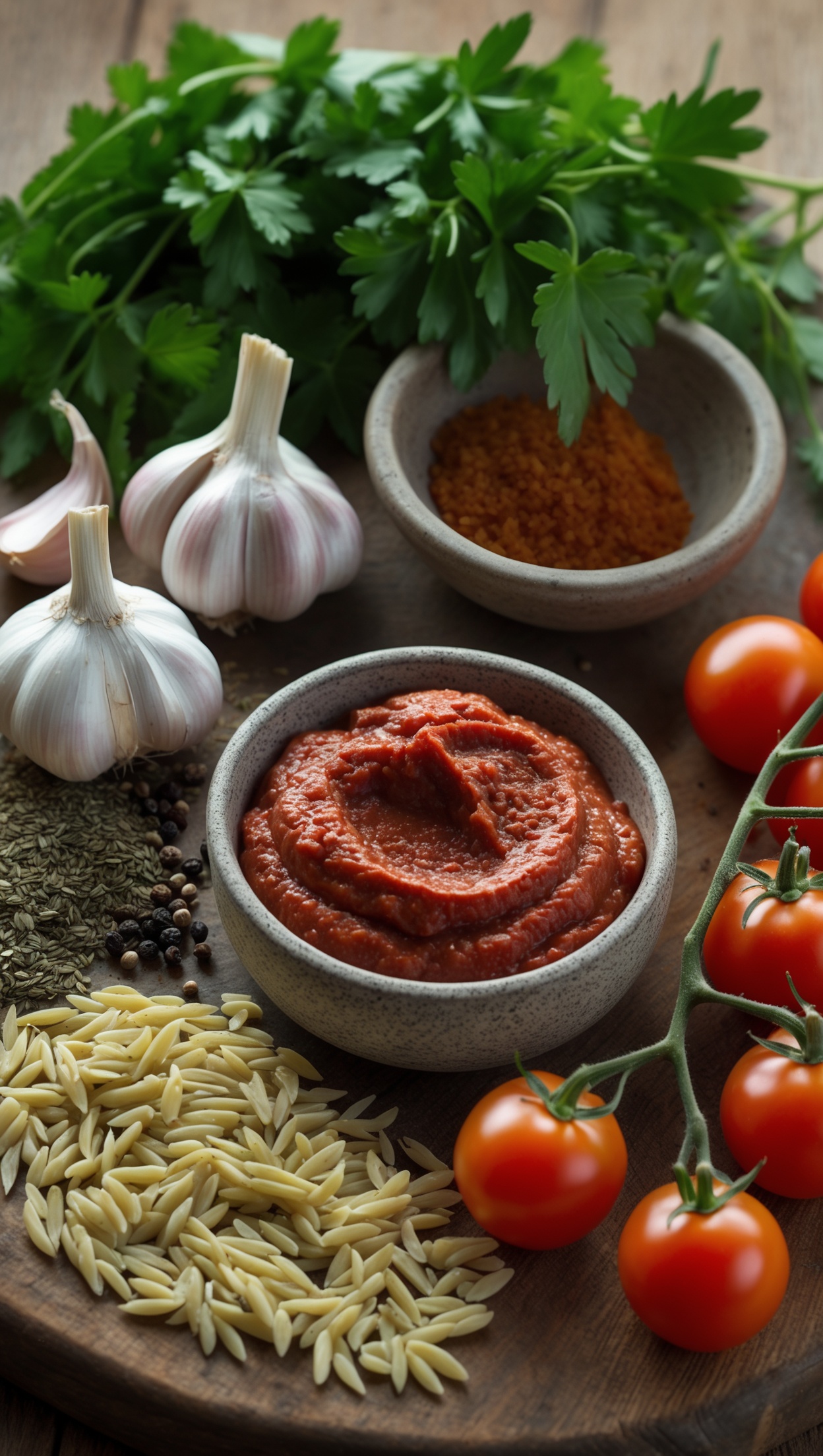
Meatballs with Kritharaki — Authentic Balkan Recipe

Keftedakia mit Kritharaki — Authentisches Balkan-Rezept

Meatballs with Kritharaki — Authentic Balkan Recipe

Image: AI-generated · Bild: KI-generiert

🇬🇧 English

This article contains affiliate links. If you buy through them, we may earn a commission at no extra cost to you.

Meatballs with Kritharaki — Authentic Balkan Recipe

If there is one dish that brings the warmth of a Balkan grandmother's kitchen straight to your table, it is meatballs cooked together with kritharaki — the small, rice-shaped orzo pasta that soaks up every drop of a rich, herby tomato sauce. Known in Greek as keftedakia me kritharaki, this dish is a staple across Greece, North Macedonia, Bulgaria and beyond. It is the kind of meal that feels effortless yet deeply satisfying, equally good on a busy weeknight or a slow Sunday afternoon.

The secret to a truly flavourful result lies in the spice blend you work into the meatballs. Dried oregano, smoked paprika and a pinch of ground cumin are the backbone of the mix — simple, but incredibly aromatic when combined with fresh garlic and parsley. Take your time seasoning confidently, and the rest follows naturally.

What You Will Need

Ingredients

  • 500 g ground beef (or a mix of beef and pork)
  • 1 medium onion, finely grated
  • 2 garlic cloves, minced
  • 1 egg
  • 3 tbsp breadcrumbs
  • 2 tbsp fresh flat-leaf parsley, finely chopped
  • 1 tsp dried oregano
  • 1 tsp smoked paprika
  • ½ tsp ground cumin
  • Salt and black pepper to taste
  • 3 tbsp olive oil (for frying)
  • 300 g kritharaki (orzo pasta)
  • 1 can (400 g) crushed tomatoes
  • 2 tbsp tomato paste
  • 1 tsp sugar
  • 500 ml beef or vegetable broth
  • 1 tsp dried oregano (for the sauce)
  • Fresh parsley for garnish
  • Grated kefalotyri or Parmesan to serve

Step-by-Step Instructions

Step 1 — Mix and Rest the Meatball Dough

In a large bowl, combine the ground meat, grated onion, minced garlic, egg, breadcrumbs, parsley, oregano, smoked paprika, cumin, salt and pepper. Mix well with your hands until fully combined. Cover and refrigerate for 15 minutes. This short rest allows the flavours to meld and makes the meatballs easier to shape.

Step 2 — Shape the Meatballs

Shape the mixture into round meatballs about the size of a walnut — roughly 3–4 cm in diameter. You should get around 20–24 meatballs. Try to keep them uniform in size so they cook evenly.

Step 3 — Brown the Meatballs

Heat the olive oil in a large, deep oven-safe skillet or casserole dish over medium-high heat. Brown the meatballs on all sides in batches, about 4–5 minutes per batch. Remove and set aside. They do not need to be fully cooked at this stage — they will finish in the sauce.

Step 4 — Build the Tomato Sauce

In the same pan, add the tomato paste and stir for 1 minute to caramelise it slightly. Add the crushed tomatoes, broth, sugar and dried oregano. Season with salt and pepper. Bring everything to a gentle boil. The sauce should smell rich and fragrant — this is where the dish really comes alive.

Step 5 — Add the Kritharaki

Add the kritharaki directly into the tomato sauce, stirring to distribute evenly. Nestle the browned meatballs on top, pressing them in gently so they are half-submerged in the sauce.

Step 6 — Simmer Until Tender

Cover the pan and cook over medium-low heat for 20–25 minutes, stirring gently halfway through. The orzo should be tender and have absorbed most of the sauce. If it looks too dry before the pasta is done, add a small splash of water or broth.

Step 7 — Rest and Serve

Remove from heat and let the dish rest for 5 minutes — the orzo will continue to absorb liquid and the flavours will settle beautifully. Garnish with fresh parsley and serve with grated kefalotyri or Parmesan on the side.

Tips for the Best Keftedakia with Kritharaki

  • Mix of meats: A 50/50 blend of beef and pork gives a juicier, more tender meatball than beef alone.
  • Grate, don't chop the onion: Grating releases the onion's moisture and ensures there are no crunchy raw pieces in the finished meatball.
  • Don't skip the rest: Chilling the meatball mixture for 15 minutes helps it bind better and results in a firmer texture after cooking.
  • Watch the liquid: Orzo absorbs liquid quickly. Keep an eye on the pan during the final 10 minutes and add broth as needed.
  • One-pan magic: Cooking the pasta directly in the sauce is the key to flavour — the kritharaki soaks up the tomato and spice as it cooks, rather than sitting in plain water.

Serving Suggestions

This dish is a complete meal on its own. A simple green salad with cucumber, olives and feta makes a perfect side. A glass of light red wine from the Balkans or Greece pairs beautifully with the rich tomato sauce. If you want to go all out, a thick slice of crusty bread to mop up the last of the sauce is absolutely mandatory.

Storage and Reheating

Leftovers keep well in the refrigerator for up to 3 days in an airtight container. When reheating, add a splash of water or broth, as the orzo will have absorbed more liquid overnight. The flavours actually deepen by the next day, making this an excellent meal-prep dish.

A Dish Rooted in Balkan Tradition

Across the Balkans and the Eastern Mediterranean, the combination of seasoned minced meat with small pasta shapes baked or simmered in tomato sauce appears in countless variations. In Greece it is called keftedakia me kritharaki; in parts of Bulgaria and North Macedonia similar dishes go by different names but share the same comforting soul. What they all have in common is an unhurried approach to cooking — letting time and heat do the work, while a handful of well-chosen spices carry all the flavour. This recipe stays true to that tradition.

🇩🇪 Deutsch

Dieser Artikel enthält Affiliate-Links (Werbung). Kaufst du darüber, erhalten wir ggf. eine Provision – für dich ohne Mehrkosten.

Keftedakia mit Kritharaki — Authentisches Balkan-Rezept

Kaum ein Gericht verkörpert die Herzlichkeit der balkanischen Küche so treffend wie Keftedakia mit Kritharaki: würzige Hackfleischbällchen, die gemeinsam mit kleinen Orzo-Nudeln in einer aromatischen Tomatensauce garen. Das Ergebnis ist ein sämiges, tiefes Geschmackserlebnis, das mit wenig Aufwand gelingt und die ganze Familie satt und glücklich macht. Wer die richtige Würzmischung für die Fleischbällchen verwendet, hat schon die halbe Arbeit getan.

Für ein authentisches Aroma sind getrockneter Oregano, geräuchertes Paprikapulver und eine Prise Kreuzkümmel unverzichtbar. Wenn du Wert auf besondere Gewürzqualität legst, findest du bei Gewürzland über 600 Kräuter und Gewürze aus aller Welt — darunter genau das geräucherte Paprikapulver, das diesem Rezept seinen charakteristischen Balkan-Charakter verleiht.

Was du brauchst

Zutaten

  • 500 g Hackfleisch (Rind oder gemischt Rind/Schwein)
  • 1 mittelgroße Zwiebel, fein gerieben
  • 2 Knoblauchzehen, fein gehackt
  • 1 Ei
  • 3 EL Semmelbrösel
  • 2 EL frische glatte Petersilie, fein gehackt
  • 1 TL getrockneter Oregano
  • 1 TL geräuchertes Paprikapulver
  • ½ TL gemahlener Kreuzkümmel
  • Salz und schwarzer Pfeffer nach Geschmack
  • 3 EL Olivenöl (zum Anbraten)
  • 300 g Kritharaki (Orzo-Nudeln)
  • 1 Dose (400 g) gehackte Tomaten
  • 2 EL Tomatenmark
  • 1 TL Zucker
  • 500 ml Rinder- oder Gemüsebrühe
  • 1 TL getrockneter Oregano (für die Sauce)
  • Frische Petersilie zum Garnieren
  • Geriebener Kefalotyri oder Parmesan zum Servieren

Schritt-für-Schritt-Anleitung

Schritt 1 — Hackfleischmasse anrühren und ruhen lassen

Das Hackfleisch mit der geriebenen Zwiebel, dem Knoblauch, dem Ei, den Semmelbröseln, der Petersilie, Oregano, Paprikapulver, Kreuzkümmel, Salz und Pfeffer in einer großen Schüssel gründlich verkneten. Abdecken und 15 Minuten im Kühlschrank ruhen lassen. Diese kurze Ruhezeit verbindet die Zutaten und macht das Formen der Bällchen deutlich einfacher.

Schritt 2 — Bällchen formen

Aus der Masse gleichmäßige runde Bällchen von etwa 3–4 cm Durchmesser (Walnussgröße) formen. Du erhältst ungefähr 20–24 Stück. Gleiche Größe sorgt für gleichmäßiges Garen.

Schritt 3 — Keftedakia anbraten

Olivenöl in einer großen, tiefen Pfanne oder einem Schmortopf bei mittlerer bis hoher Hitze erhitzen. Die Bällchen portionsweise von allen Seiten 4–5 Minuten anbraten, bis sie goldbraun sind. Herausnehmen und beiseitelegen. Sie müssen an dieser Stelle noch nicht vollständig durchgegart sein — sie garen in der Sauce fertig.

Schritt 4 — Tomatensauce zubereiten

Im selben Topf das Tomatenmark einrühren und 1 Minute unter Rühren anrösten, damit es leicht karamellisiert. Die gehackten Tomaten, die Brühe, den Zucker und den getrockneten Oregano dazugeben. Mit Salz und Pfeffer abschmecken und alles kurz aufkochen lassen. Die Sauce sollte bereits herrlich duften.

Schritt 5 — Kritharaki einrühren

Die Kritharaki direkt in die Tomatensauce geben und gut unterrühren. Die angebratenen Keftedakia obenauf setzen und leicht in die Sauce drücken, sodass sie halb eingetaucht sind.

Schritt 6 — Bei niedriger Hitze köcheln lassen

Den Topf abdecken und bei mittlerer bis niedriger Hitze 20–25 Minuten köcheln lassen. Dabei einmal vorsichtig umrühren. Die Nudeln sollten weich sein und den Großteil der Flüssigkeit aufgenommen haben. Falls die Masse zu trocken wird, etwas Brühe oder Wasser nachgießen.

Schritt 7 — Ruhen lassen und servieren

Den Topf vom Herd nehmen und das Gericht 5 Minuten ruhen lassen, damit sich die Aromen setzen. Mit frischer Petersilie garnieren und mit geriebenem Kefalotyri oder Parmesan servieren.

Tipps für perfekte Keftedakia mit Kritharaki

  • Gemischtes Hack: Eine Mischung aus Rind- und Schweinehack macht die Bällchen saftiger und zarter.
  • Zwiebel reiben, nicht schneiden: Geriebene Zwiebel gibt ihre Feuchtigkeit gleichmäßig ab und hinterlässt keine rohen Stücke im Bällchen.
  • Ruhezeit einhalten: Das Kühlen der Masse sorgt für eine bessere Bindung und festere Struktur nach dem Garen.
  • Flüssigkeit im Blick behalten: Kritharaki saugt Flüssigkeit rasch auf. In den letzten 10 Minuten regelmäßig nachschauen und bei Bedarf Brühe nachgießen.
  • Ein-Topf-Prinzip: Indem die Nudeln direkt in der Sauce garen, nehmen sie alle Aromen von Tomate und Gewürzen auf — das ist das Herzstück dieses Rezepts.

Serviervorschläge

Keftedakia mit Kritharaki ist ein vollständiges Gericht, das für sich allein steht. Ein einfacher Salat mit Gurke, Oliven und Feta rundet das Menü ab. Wer einen passenden Wein dazu genießen möchte: Ein leichter griechischer Rotwein, etwa ein Xinomavro oder Agiorgitiko, harmoniert wunderbar mit der würzigen Tomatensauce. Bei Hawesko findest du als Deutschlands führendem Weinhändler über 10.000 Weine, Sekt und Champagner — darunter sicher den richtigen Begleiter für diesen Abend.

Aufbewahrung und Aufwärmen

Reste halten sich bis zu 3 Tage im Kühlschrank in einem luftdichten Behälter. Beim Aufwärmen einfach einen Schuss Wasser oder Brühe dazugeben, da die Nudeln über Nacht weiter quellen. Der Geschmack intensiviert sich sogar — dieses Gericht schmeckt am nächsten Tag oft noch besser.

Ein Gericht mit Tradition

Von Griechenland über Nordmazedonien bis Bulgarien findet sich die Kombination aus gewürztem Hackfleisch und kleinen Nudeln in Tomatensauce in unzähligen Variationen. Was sie alle eint, ist eine langsame, geduldige Zubereitungsweise — und das Vertrauen in eine handvoll sorgfältig ausgewählter Gewürze. Dieses Rezept bleibt dieser Tradition treu: kein Schnickschnack, nur echte Aromen.

Wenn du deine Keftedakia mit besonders aromatischen Gewürzen verfeinern möchtest, kannst du über Gewürzland aus über 600 Kräutern und Gewürzen aus aller Welt wählen — inklusive geräuchertem Paprikapulver und Kreuzkümmel in Spitzenqualität — und deinem Balkan-Klassiker das gewisse Etwas verleihen.