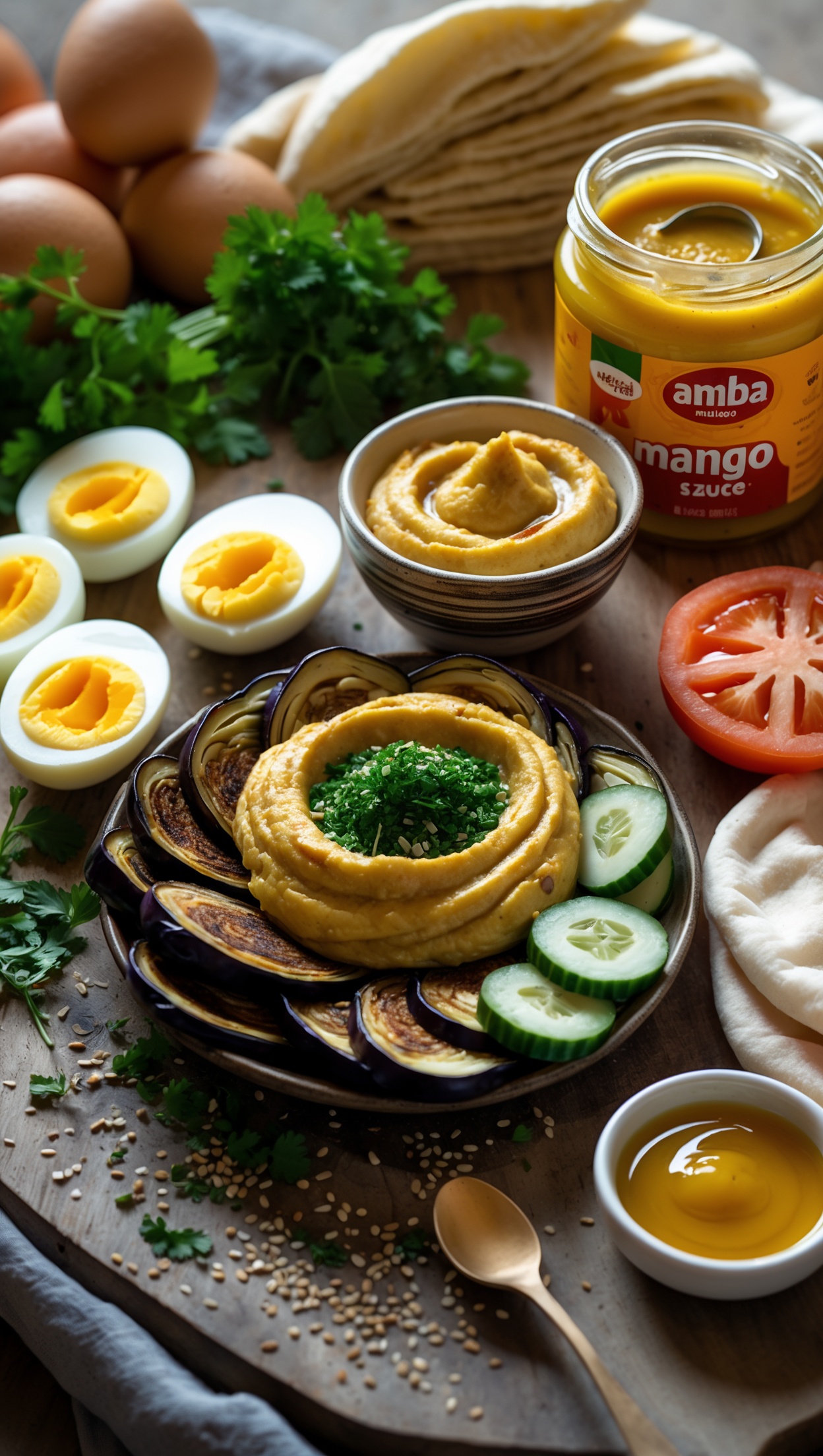
Authentic Sabich Recipe — Easy & Delicious
If you have never tried Sabich, you are in for a real treat. This iconic Israeli street food sandwich is a celebration of bold flavors, vibrant textures, and centuries of culinary tradition. Originating from Iraqi-Jewish immigrants who brought it to Israel in the mid-20th century, Sabich is now one of the most beloved street foods found in markets and food stalls across Tel Aviv, Haifa, and beyond. Packed into a warm pita bread, it layers golden fried eggplant, creamy hummus, hard-boiled eggs, tangy amba sauce, fresh vegetables, and tahini into something truly extraordinary.
What makes Sabich so special is its depth of flavor — the smoky richness of the eggplant, the brightness of the Israeli salad, the earthy tahini, and the unmistakable punch of amba (a fermented mango pickle sauce). This recipe guides you step by step to recreate the authentic street food experience in your own kitchen.
What Is Sabich?
The name Sabich (pronounced SAH-beekh) comes from the Arabic word for "morning," as Iraqi Jews traditionally ate this dish for breakfast on Shabbat mornings. When these communities emigrated to Israel, a vendor named Sabich Tsvi Halabi began selling it as a street food snack in the 1960s in the town of Ramat Gan — and the rest is history.
Today, Sabich has become a symbol of Israeli food culture, beloved by locals and food travelers alike. Unlike the more internationally known falafel pita, Sabich is entirely vegetarian and relies on the magic of fried eggplant as its hero ingredient.
Ingredients
For the Fried Eggplant
- 2 medium eggplants, sliced into 1 cm rounds
- Salt, for drawing out moisture
- Vegetable oil, for frying
For the Hard-Boiled Eggs
- 4 large eggs
For the Israeli Salad
- 2 ripe tomatoes, finely diced
- 2 Persian cucumbers, finely diced
- ¼ red onion, finely diced
- 2 tablespoons fresh flat-leaf parsley, chopped
- Juice of half a lemon
- 2 tablespoons extra virgin olive oil
- Salt and black pepper to taste
For Assembly
- 4 pita breads (preferably thick, fluffy Israeli-style)
- 200 g store-bought or homemade hummus
- 4 tablespoons amba sauce (mango pickle sauce — available in Middle Eastern shops)
- 4 tablespoons tahini
- Pickled cucumbers or turnips, sliced
- Harissa or zhug (optional, for heat)
Step-by-Step Instructions
Step 1: Prepare the Eggplant
Slice the eggplants into 1 cm rounds and arrange them on a clean surface. Sprinkle generously with salt on both sides and allow them to sit for at least 30 minutes. This draws out excess moisture and bitterness. After resting, pat the slices dry thoroughly with paper towels.
Step 2: Fry the Eggplant
Heat a generous layer of vegetable oil in a wide frying pan over medium-high heat. Fry the eggplant slices in batches for about 3–4 minutes per side until deeply golden and soft through the center. Transfer to a plate lined with paper towels to drain. Season lightly with salt while still hot. Do not rush this step — properly fried, golden eggplant is the soul of Sabich.
Step 3: Hard-Boil the Eggs
Place the eggs in a saucepan, cover with cold water, and bring to a boil. Reduce to a gentle simmer and cook for 10–11 minutes for fully set yolks. Transfer immediately to an ice bath to stop the cooking. Peel and slice in half lengthways.
Step 4: Make the Israeli Salad
Combine the finely diced tomatoes, cucumbers, and red onion in a bowl. Add the chopped parsley, lemon juice, olive oil, salt, and pepper. Toss well and taste for seasoning. The key is cutting everything finely — this is a classic Israeli salad, not a chunky chopped salad.
Step 5: Warm the Pita
Warm the pita breads in a dry skillet over medium heat, turning once, until soft and pliable. Alternatively, wrap them briefly in foil and warm in the oven at 180°C for 5 minutes.
Step 6: Assemble the Sabich
Open each pita to create a pocket. Spread a generous layer of hummus on the inside. Layer in two or three slices of fried eggplant, then add the sliced hard-boiled egg. Spoon over a generous serving of Israeli salad, then drizzle with tahini and amba sauce. Add pickled vegetables and a dash of harissa or zhug if you like heat. Serve immediately.
Tips for the Perfect Sabich
- Salt the eggplant properly: This step is non-negotiable. It removes bitterness and ensures the flesh fries rather than steams.
- Use good-quality tahini: Look for 100% pure sesame tahini with a smooth, pourable consistency.
- Don't skip the amba: This mango pickle sauce is what gives Sabich its unique, tangy identity. It is available in most Middle Eastern grocery stores or online.
- Serve immediately: Sabich, like all great pita sandwiches, is best eaten the moment it is assembled before the bread softens.
Variations & Serving Suggestions
While the classic Sabich is vegetarian, you can add roasted red peppers, a dollop of spicy schug, or even a slice of roasted portobello mushroom for extra depth. Some Tel Aviv vendors add fried cauliflower for additional texture. Serve alongside a cold glass of fresh lemonade or a crisp Israeli salad on the side for a complete meal.
The Cultural Story Behind Sabich
Understanding Sabich means appreciating the layered history of Israel's food culture. The dish reflects the rich culinary heritage of Iraqi Jewry, adapted into the vibrant street food scene of modern Israel. The combination of fried eggplant and hard-boiled eggs was the traditional Shabbat morning meal — cold foods prepared the evening before to respect the day of rest. Eating Sabich today is as much about cultural memory as it is about flavor.
For the perfect wine pairing with this dish, Hawesko offers an outstanding selection of premium wines to complement every recipe. For the finest spices and seasonings to elevate your cooking, Gewürzland has everything you need.