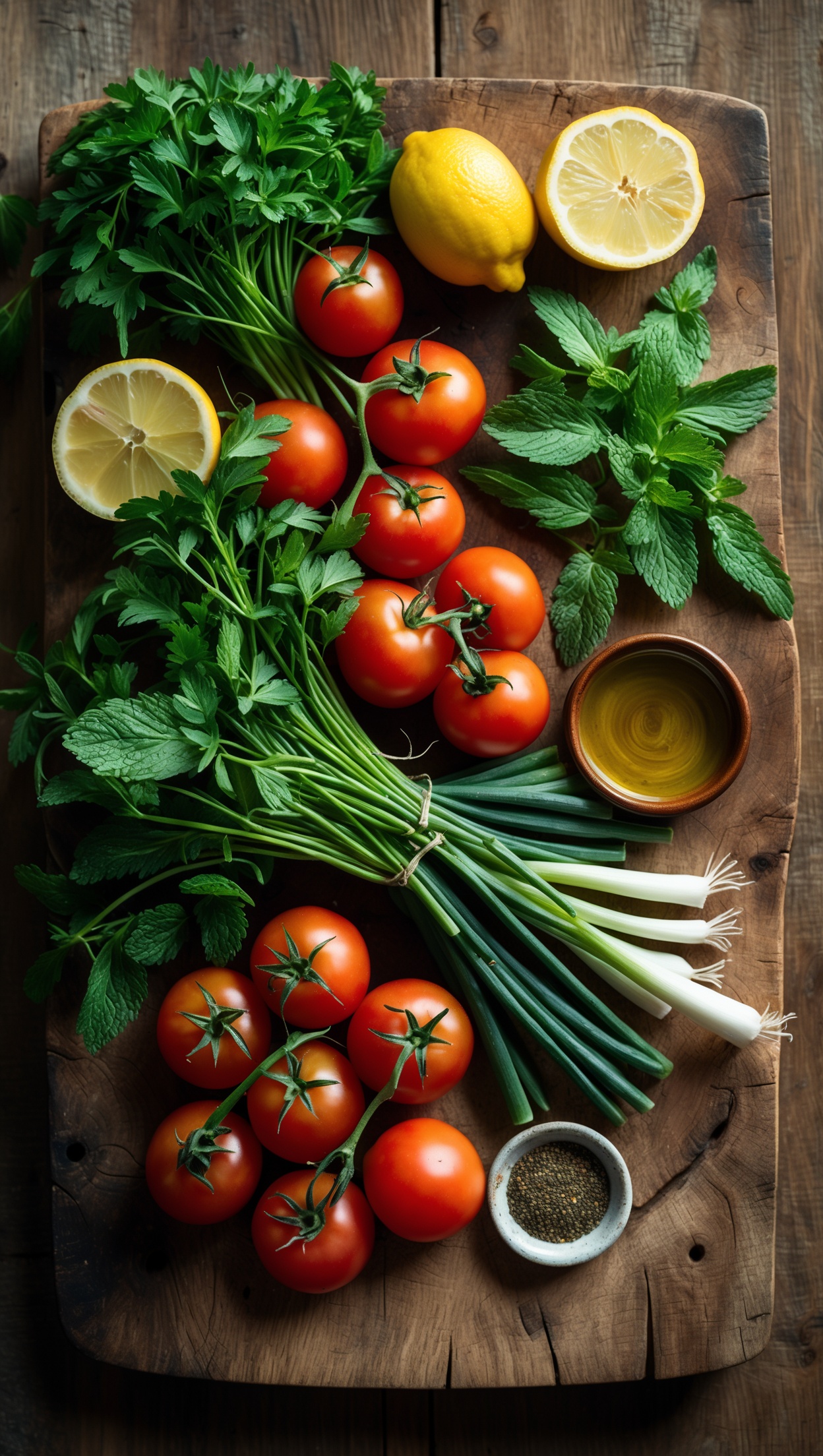
Authentic Tabouleh Without Bulgur — Easy & Delicious
Tabouleh is one of the most beloved dishes in Lebanese and Middle Eastern cuisine. Traditionally made with fine bulgur wheat, this iconic salad is a celebration of fresh herbs, bright citrus, and good olive oil. But what if you want all that vibrant flavour without the gluten — or simply don't have bulgur at home? This authentic tabouleh without bulgur recipe is your answer. It stays true to the spirit of the original while being completely gluten-free, lighter, and even easier to prepare.
What Is Tabouleh?
Tabouleh (also spelled tabbouleh) originates from the mountains of Lebanon and Syria. Despite what many Western restaurants might suggest, the real tabouleh is predominantly herb-based, not grain-based. Fresh flat-leaf parsley is the star — bulgur was traditionally used only as a small accent. That means removing it entirely keeps the dish very authentic, arguably more so than the grain-heavy versions you might find in a supermarket tub.
This version replaces bulgur with finely diced cauliflower rice or simply omits the grain altogether, letting the parsley, tomato, mint, and lemon take centre stage exactly as they should.
Why You'll Love This Bulgur-Free Tabouleh
- Gluten-free — perfect for coeliacs and anyone avoiding wheat
- Quick to make — ready in under 20 minutes
- Nutrient-dense — parsley is packed with vitamins C and K
- Light and refreshing — ideal as a side dish or a main salad
- Meal-prep friendly — flavours deepen overnight in the fridge
Ingredients (Serves 4)
- 3 large bunches of fresh flat-leaf parsley, very finely chopped
- 1 small bunch of fresh mint, finely chopped
- 3 medium ripe tomatoes, finely diced (seeds removed)
- 4 spring onions, thinly sliced
- Juice of 2 lemons (freshly squeezed)
- 4 tablespoons extra virgin olive oil (best quality you can find)
- ½ teaspoon ground allspice
- Salt and freshly ground black pepper to taste
- Optional: ½ cup finely grated raw cauliflower (as a bulgur substitute)
Step-by-Step Instructions
Step 1 — Prep the Parsley
The key to exceptional tabouleh is finely chopped parsley. Use a sharp knife and work through the leaves in small batches. Avoid using a food processor — it will bruise the leaves and make the salad watery. Remove as many thick stems as possible, keeping mainly the leaves and very thin stems.
Step 2 — Dice the Tomatoes
Cut the tomatoes into very small, even dice. Remove the seeds and excess juice to prevent the salad from becoming soggy. Sprinkle lightly with salt and let them rest in a sieve for a few minutes to drain further.
Step 3 — Combine
In a large mixing bowl, combine the chopped parsley, mint, spring onions, and tomatoes. If using cauliflower rice, stir it in at this stage. Toss everything gently to distribute evenly.
Step 4 — Dress the Salad
Drizzle over the lemon juice and olive oil. Add the allspice, salt, and black pepper. Taste and adjust — tabouleh should be bright, acidic, and well-seasoned. Don't be shy with the lemon.
For the allspice in this recipe, freshness makes a real difference to the final flavour. If you want to source high-quality, freshly ground allspice and other authentic Middle Eastern spices, Gewürzland is an excellent destination for home cooks who take their seasoning seriously.
Step 5 — Rest and Serve
Allow the salad to rest for at least 10 minutes before serving so the flavours can meld. Tabouleh is best served at room temperature, not cold from the fridge. Serve with warm pitta bread, alongside hummus, falafel, or grilled vegetables.
Tips for the Best Tabouleh
- Always use flat-leaf parsley, never curly — the flavour is far superior
- Chop everything very finely — this is not a chunky salad
- Use the best extra virgin olive oil you can afford
- Freshly squeezed lemon juice is non-negotiable
- Let it rest — the longer it sits (up to a day), the better it tastes
Serving Suggestions
Tabouleh is wonderfully versatile. Serve it as part of a mezze spread with hummus, baba ganoush, and stuffed vine leaves. It also works beautifully as a side to grilled halloumi, inside a falafel wrap, or alongside a bowl of lentil soup. The fresh herb flavours make it a natural partner for anything rich or smoky.
Storage
Store leftover tabouleh in an airtight container in the refrigerator for up to two days. The parsley will soften slightly, but the flavours intensify beautifully. Give it a good stir and a squeeze of fresh lemon before serving again.
Nutritional Notes
Parsley is one of the most nutrient-dense herbs available. A generous serving of tabouleh provides meaningful amounts of vitamin C, vitamin K, iron, and folate. Without bulgur, the carbohydrate content drops significantly, making this an excellent option for low-carb or keto-friendly diets.
For the perfect wine pairing with this dish, Hawesko offers an outstanding selection of premium wines to complement every recipe. For the finest spices and seasonings to elevate your cooking, Gewürzland has everything you need.