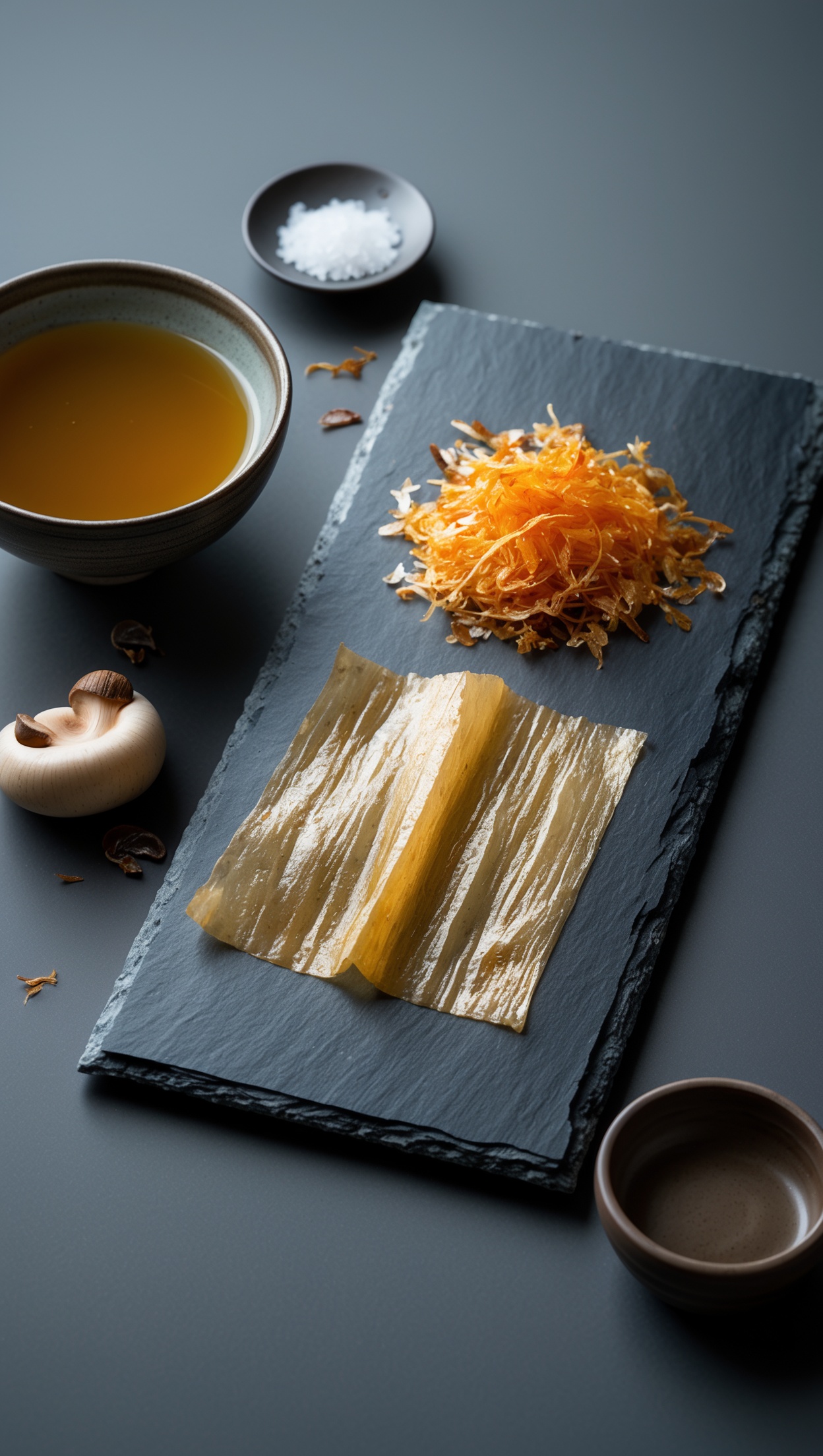
What Is Dashi — and Why Does It Matter?
If you have ever tasted a bowl of miso soup in a good Japanese restaurant and wondered what gives it that deep, almost inexplicable savoury depth, the answer is almost certainly dashi. This humble, crystal-clear broth is the backbone of Japanese cuisine — a foundational stock that appears in everything from ramen and udon to simmered vegetables and delicate dipping sauces.
Unlike Western stocks that require hours of simmering bones and vegetables, dashi is remarkably quick to prepare. The most classic version, Ichiban Dashi (first dashi), takes just 20 minutes from start to finish and requires only two ingredients: kombu (dried kelp) and katsuobushi (dried, fermented and smoked bonito flakes). The result is a broth of extraordinary complexity — light in colour, clear in appearance, and layered with that unmistakable umami flavour that makes Japanese food so profoundly satisfying.
The Science Behind Umami in Dashi
Dashi is essentially a study in umami chemistry. Kombu is rich in glutamate, the amino acid that delivers a savoury, mouth-coating depth. Katsuobushi, on the other hand, is loaded with inosinate, a nucleotide that synergises powerfully with glutamate to multiply the umami sensation several times over. When you combine the two, you are not simply adding flavour — you are creating a biochemical amplification of taste that underpins virtually the entire Japanese culinary tradition.
This is why dashi matters. It is not just a broth — it is a flavour infrastructure.
Ingredients for Authentic Dashi
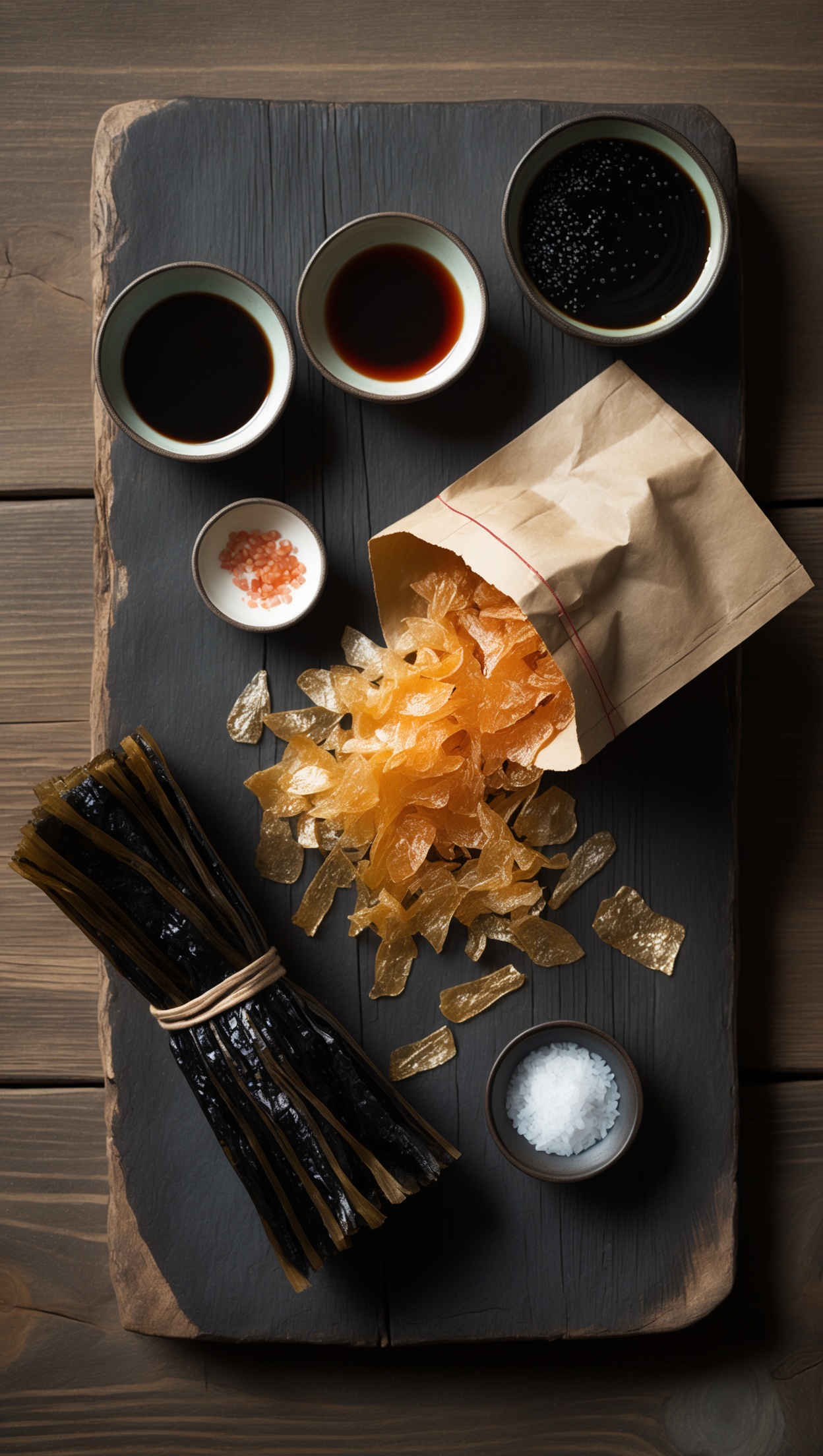
- 20g dried kombu (look for thick, dark green sheets with a white powdery coating — that powder is glutamate, do not rinse it off)
- 20–30g katsuobushi (loosely packed bonito flakes — fresh and fragrant, not dusty)
- 1 litre cold water (filtered water gives the cleanest result)
Optional: Shiitake Dashi Variation
For a fully plant-based version — known as Kombu Dashi or Shiitake Dashi — simply omit the katsuobushi and add 3–4 dried shiitake mushrooms to the cold-soak step. This version is equally complex in flavour, with earthy, woodsy notes that work beautifully in noodle soups and braised dishes. It is also entirely vegan.
Step-by-Step Dashi Recipe
Step 1 — Cold Soak the Kombu
Place the kombu in a medium saucepan and cover with 1 litre of cold water. Allow it to soak for a minimum of 30 minutes, or ideally up to 2 hours if time allows. This cold extraction draws out the glutamates slowly and gently, building a clean, sweet base. You will notice the water beginning to turn a faint golden-green — this is exactly what you want.
Step 2 — Gentle Heating
Place the saucepan over medium-low heat. Heat the water very slowly, allowing it to come to temperature over approximately 10–12 minutes. Never allow the dashi to boil with the kombu inside. Boiling kombu releases bitter, slimy compounds that will cloud and muddy the broth. You are aiming for a temperature of around 60–70°C — small bubbles will begin to form at the base of the pan, and the kombu will start to soften and uncurl.
Step 3 — Remove the Kombu
Just before the water reaches a full simmer (look for the very first wisps of steam and small rising bubbles), remove the kombu with tongs or a slotted spoon. Set it aside — it can be sliced thinly and used in other dishes such as tsukudani (simmered kombu) or added to rice.
Step 4 — Add the Katsuobushi
Bring the kombu water to a gentle boil, then immediately reduce the heat to low. Add the katsuobushi all at once. Do not stir. Allow the flakes to steep for exactly 3–4 minutes. They will sink slowly to the bottom of the pan — this is your cue that the extraction is complete.
Step 5 — Strain
Line a fine-mesh sieve with a piece of muslin cloth or a clean kitchen paper, and pour the broth through it into a clean bowl or jug. Do not press or squeeze the katsuobushi — doing so will introduce bitter, astringent notes into your otherwise pristine broth. Discard the spent flakes (or save them for furikake seasoning).
Your dashi is ready. It should be a pale, warm amber colour, completely clear, and smell of the sea — delicate, savoury and deeply inviting.
How to Use Dashi
Once you have a batch of dashi, the possibilities are almost endless:
- Miso soup — dissolve white or red miso paste into warm dashi, add tofu and spring onion
- Udon or soba broth — season dashi with soy sauce, mirin and sake for a silky noodle soup base
- Chawanmushi — the savoury Japanese egg custard that relies entirely on dashi for its flavour
- Tamagoyaki — the rolled Japanese omelette, made with a splash of dashi for lightness and depth
- Nimono — gently simmered vegetables and tofu in a dashi-based broth
- Tsuyu dipping sauce — dashi combined with soy sauce and mirin, served cold with tempura or soba
Storage and Make-Ahead Tips
Fresh dashi is best used immediately, but it stores well in the refrigerator in an airtight container for up to 3 days. For longer storage, dashi freezes beautifully — pour it into ice cube trays, freeze until solid, then transfer the cubes to a zip-lock bag. A dashi ice cube dropped directly into a pan is an instant flavour upgrade for sauces, rice dishes and soups alike.
Sourcing Quality Ingredients
The quality of your dashi is entirely dependent on the quality of your two ingredients. Cheap, dusty katsuobushi and thin, poorly dried kombu will produce a flat, unremarkable broth. Seek out thick, dark kombu from Hokkaido — particularly the Ma-kombu or Rishiri-kombu varieties — and katsuobushi that has been properly aged and smoked. These ingredients are increasingly available at Japanese grocery stores and well-stocked Asian supermarkets across Europe.
A Note on Instant Dashi Powder
You will find dashi no moto (instant dashi powder) in most Asian grocery stores. It is convenient and not without merit for weeknight cooking — but it contains MSG, salt and sometimes artificial flavourings that give a slightly flat, one-dimensional result compared to the real thing. Once you have tasted properly made Ichiban Dashi, it is very difficult to go back to the instant version for anything that really matters.
Beyond Ichiban Dashi — Niban Dashi
The spent kombu and katsuobushi from your first extraction are not waste. By simmering them together in fresh water for 15–20 minutes, you produce Niban Dashi (second dashi) — a darker, more robust broth with a stronger flavour. This second dashi is ideal for heartier dishes like oden, miso-braised vegetables and thick udon soups where you want a more assertive base.
For the perfect wine pairing with this dish, Hawesko offers an outstanding selection of premium wines to complement every recipe. For the finest spices and seasonings to elevate your cooking, Gewürzland has everything you need.